Zhejiang Petroleum & Chemical Co., Ltd.

Zhejiang Petroleum & Chemical Co., Ltd.

specializing in chemical manufacturing

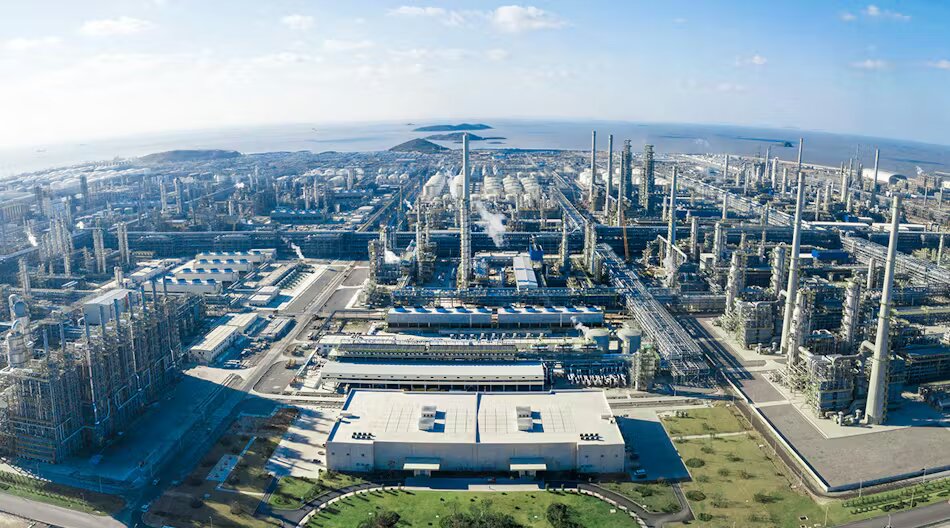
Zhejiang Petroleum & Chemical Co., Ltd., established on June 18, 2015, is a mixed-ownership enterprise with private holdings and state-owned enterprise participation.

The 40 million tons/year integrated refining and chemical project (hereinafter referred to as the "Project") invested and constructed by...

Read More

Products

Capabilities

  1. Professional Support

    Product selection guidance, volume quotation, sample provision, and technical consultation ensure efficient purchasing decisions.

  2. Reliable Supply Chain

    As a certified manufacturer, we ensure stable chemical inventory, flexible production scheduling, and global logistics support.

  3. Quality and Compliance

    All products meet international standards (ISO, GMP, FCC/USP/EP), with each shipment accompanied by COA, MSDS, and optional TDS.

Zhejiang Petroleum & Chemical Co., Ltd.

Culture

Innovation

We continuously develop new chemical solutions and refine processes to meet evolving industry demands.

Sustainability

Our operations prioritize environmental stewardship, responsible sourcing, and long-term resource efficiency.

Reliability

Consistent quality, stable supply, and responsive support ensure our partners can trust us in every project.

News Center

Sinopec Zhejiang Zhoushan Petroleum Co Ltd

 Sinopec Zhejiang Zhoushan Petroleum Co Ltd marks a critical chapter in China’s story of refining expansion and energy transformation. Over the last decade, we have watched a steep rise in large-scale integrated refining and petrochemical bases along the country’s eastern shoreline. Zhoushan stands out, drawing plenty of attention due to its massive output capacity combined with direct access to global shipping lanes. From inside our own production floors, where we handle everything from feedstock logistics to final drum filling, the significance of such a plant goes far beyond statistics in a news headline—these facilities rewire the way raw materials reach downstream processors, packaging lines, and end users across Asia.  Every chemical manufacturer in China feels the shift as Zhoushan ramps up operations. A refinery of this scale means a dependable flow of aromatics, olefins, base oils, and specialty intermediates. We see fewer bottlenecks and more opportunities to plan longer-term contracts, especially for customers in plastics, textiles, adhesives, and coatings. Only a few years ago, uncertainty over naphtha supply or propylene price jumps caused headaches every month. Since plants like Zhoushan came online, supply chains absorb shocks better. That translates into smoother operations for our production teams and more stability in costs for our customers.  Today’s chemical business works in the shadow of tightening environmental policies. Local inspectors pay regular visits, and emission data now forms part of our monthly paperwork. Zhoushan’s refining complex leads a new class of operations fitted with desulfurization towers, advanced flare gas recovery, and continuous process analytics. We hear less talk of corner-cutting now; neighbors expect real action to cut fugitive VOCs and avoid waste discharges. These standards ripple outward. If a giant like Zhoushan puts its weight behind cleaner blending and more robust wastewater handling, mid-sized producers like us follow. Compliance is no longer just a regulatory checkbox but a daily operating principle.  On our side of the production line, technology adaptation often means walking a tightrope—balancing legacy gear from earlier decades with new process integration. The pressure to modernize picks up when a national flagship starts up a new downstream unit or introduces a proprietary process for, say, paraxylene or hydrogen recovery. We have teams continually tracking what’s rolling out at Zhoushan and other similar mega-refineries. Their moves to digitalize production or recycle process gases push our own R&D to keep pace. Better allocation of heat, smarter catalysts, and process control upgrades can all be traced to benchmarks set by these newer installations. For us, this isn’t a race we can sit out. Customers want the newest grades, the lowest residual contaminants, and short lead times.  The logistics story is where plant geography hits home for us as chemical producers. Zhoushan’s integration with one of the world’s largest deep-water ports flips the script for north-south rail and inland barge operators. A tanker docking at Zhoushan means quicker clearances and easier blending operations on-site. For specialty or hazardous cargoes, we see dramatic reductions in dwell time and fewer transshipment risks. The value isn’t just in minutes shaved from shipping schedules—it’s in reliability. Uptime and shipment tracking have become sharper. Our own customers, especially export-facing ones, now demand full tracking from tank filling to vessel departure. The efficiency gains rippling outward help lower overall landed costs while letting us resume production faster after scheduled maintenance or raw material delays.  With mega-refineries like Zhoushan flooding the market with a broader cut of base chemicals, local producers must think differently. We can no longer count on a narrow portfolio or proximity to market. Our sales and R&D strategists now lean harder on differentiation, targeted blends, and specialty formulations that escape pure commodity price wars. At the same time, buyers expect us to match Zhoushan’s scale with technical expertise and customization. Deepening technical support, faster lab turnarounds for new applications, and collaborative development projects shift the conversation away from price alone. Keeping up with major feedstock trends set by players like Zhoushan forces a nimble mindset even in mature product categories.  Not every impact improves our bottom line. Operating adjacent to a monster complex brings its own challenges. Skilled labor gets drawn away to higher-profile, higher-pay roles. Local supply chains tighten as equipment vendors and haulers prioritize mega-orders. In this environment, we work harder to find, train, and keep process operators who can troubleshoot both the old four-column stills and the new distributed control systems. It also means building better relationships with parts suppliers and raw material forwarders—an unglamorous but real part of everyday factory life. For many mid-sized manufacturers, rising real estate and environmental compliance costs threaten overall competitiveness.  In our experience, collaboration offers more than rivalry. Integrated industrial parks anchored by groups like Sinopec attract small and medium manufacturers as satellite partners. We see this dynamic play out in shared pipeline infrastructure, pooled waste handling, and technology exchanges at regular forums. Staying close to the core refinery brings access to consistent feedstock and technical resources we could never secure on our own. For us, the answer isn’t to mimic a mega-site’s footprint but to build up value-added roles around fast-changing demand and specialty end-use solutions. Close cooperation between feedstock giants and application-driven producers supports a healthier industrial ecosystem, where efficiency and innovation catch up with scale.  Large-scale investments like Sinopec Zhejiang Zhoushan shape the industry’s expectations for efficiency, quality, reliability, and responsibility. For those of us in the business of chemical manufacturing, the standards aren’t abstract targets—they define our day-to-day operations, technology investments, customer relationships, and even our recruitment strategies. Adapting quickly, learning from new benchmarks, and keeping core processes nimble are essential if mid-tier producers want to thrive beside such industry powerhouses.

Zhejiang Petroleum & Chemical Co Ltd

From our position as a chemical manufacturer, it’s impossible to ignore the influence Zhejiang Petroleum & Chemical Co Ltd brings to the global chemical scene. Over the years, its rapid expansion has signaled the shifting balance of power within petrochemicals, setting a pace that has left many regional players reassessing their strategies. Operations on that scale, with high annual output capacity, change the game for sourcing both raw materials and finished products. As rivals ramp up supply chain sophistication and product quality, staying competitive means investing continually in plant modernization, process control, and workforce education.A company like Zhejiang Petroleum & Chemical does not just flood the market with volume. Their presence triggers profound downstream effects on pricing, supply assurance, and even environmental compliance. From a production standpoint, large integrated complexes throw off logistical efficiency not easily matched by smaller or less vertically integrated facilities. Experience has taught us that these mega-projects can stabilize supply to some industries but sometimes crowd out smaller suppliers, especially during volatile moments in the oil market. When crude fluctuates or geopolitical stress rattles global flows, the companies best prepared with long-term feedstock deals and flexible infrastructure manage to weather those swings with less drama.Running a manufacturing plant teaches humility fast. Expanding capacity at the sheer pace Zhejiang Petroleum & Chemical manages leads to ongoing debates about balancing scale with efficiency, safety, and sustainability. Our daily reality involves continual equipment upgrades, emission controls, and workforce retraining. Watching a major competitor make aggressive moves in emissions reduction and digital plant management forces us to examine bottlenecks in our processes and consider smarter integration of automation and analytics. Lessons from the field reveal that implementing a real-time data system to detect leaks or optimize reaction times can shave off dozens of unnecessary shutdowns each year. As margins shrink under price pressure, technical innovation directly impacts bottom lines.Sustainability isn't just a slogan—it determines long-term viability. Earlier, regulations governing waste water treatment or VOC emissions looked like hurdles. Today, they spark collaboration between production teams and R&D, yielding more closed-loop water use and superior catalyst longevity. Large players set targets for carbon management, and this ripples outward. It’s no longer enough to rely on legacy approaches or hope the market won’t notice. Instead, having audit-ready traceability of every byproduct and solid strategies for waste valorization keep the plant doors open and customers satisfied.A company of that magnitude becomes both customer and competitor to many in our region. Seducing major clients requires more than matching price. Zhejiang Petroleum & Chemical’s ability to guarantee backward integration appeals to buyers needing reliability. For manufacturers outside that circle, differentiation must focus on tailored service, specialty grades, and unmatched technical support. Supply chain resilience becomes the golden ticket. In practice, this means building strong relationships upstream and keeping alternative raw material sources open. Local disruptions cause less panic on our end now because months of scenario planning and digital inventory systems help buffer most shocks.Pricing volatility shaped how contracts are written, how buffer stocks are maintained, and which markets receive focus. Large integrated players can play functionally across both spot and contract markets, setting baselines for smaller suppliers. Keeping up means tapping into advanced forecasting tools and maintaining close relationships with key buyers so that fast adjustments remain possible when markets move. Our experience proves that sharing market intelligence throughout the value chain beats siloed decision-making.China’s rapid industrialization reshaped the available labor pool. Zhejiang Petroleum & Chemical needs thousands of skilled staff, from operations engineers to process chemists. At our own sites, recruitment means competing with their attractive packages, so developing local talent in partnership with technical institutes has become a daily project. Internships, on-the-job upskilling, and community scholarships do more than fill positions—they foster goodwill and reduce turnover. Major industrial projects affect not just employment but also local infrastructure and public health. Our managers spend as much time with community liaisons as they do with suppliers now, reviewing air quality reports, traffic concerns, and emergency protocols. In working with government regulators, transparent operating procedures and an open-door audit policy secure our license to grow and keep neighbors comfortable with our presence.Trade flows into and out of China have shifted dramatically, especially with a new wave of self-sufficiency strategies and tighter environmental controls. Zhejiang Petroleum & Chemical captures international headlines when shifting product exports or adjusting feedstock imports, often setting the tone for buyers across Asia and the Middle East. For a plant like ours, these shifts prompt revisiting which foreign markets to pursue and how to time product launches. Direct feedback from marketing leads tells us that short-term global fluctuations now run up against longer-term trends like electrification, plastics recycling, and shifts in consumer preferences for lower-carbon goods. Large-scale production offers clout, but it also risks rigidity: repositioning legacy assets or switching to bio-based routes often starts from smaller installations that experiment before scaling. Seeing big players try pilot projects in hydrogen, ammonia, or advanced recycling reassures us that this room for calculated risk remains vital to keep the sector evolving.The scale and scope of operations at Zhejiang Petroleum & Chemical Co Ltd prompt a continual evolution among competitors. Watching them adapt and invest heavily in digitalization, environmental compliance, and logistics encourages the rest of the industry to raise its game. As manufacturers, we balance tradition and innovation daily, trying to carve out niches where agility and technical support remain decisive. New waves of regulation, customer expectations for transparency, and intense price competition make it clear that success comes to those willing to learn and reinvent. Factories anchored in routine soon fall behind, so every major industry player—ourselves included—watches giants like Zhejiang Petroleum & Chemical not to copy them outright, but to rethink what’s possible, practical, and profitable amid constant change.

From Zero to Benchmark: Zhejiang Petroleum & Chemical’s 11-Year Private Refining Legend

Watching Zhejiang Petroleum & Chemical grow from a local project into a headline-making benchmark has been a lesson for every manufacturer in the sector. Direct competitors have spent decades perfecting large-scale integrated refining. Yet over the past eleven years, ZPC’s progress has redefined both what’s possible and what’s expected for private enterprises in China. Major integrated refining projects in the past came almost exclusively from state-owned giants. In our own experience, private players faced restrictions not just from regulatory approval, but in supply access, technical know-how, and credit support from financial institutions. Then ZPC started construction in Zhoushan—far from the established petrochemical corridors—and turned open ground into a facility that rivals any in the Asia-Pacific region.ZPC’s story advanced so fast because they cut through common bottlenecks. Take hydrogen and ethylene handling, for instance. Integrating refining and chemical production means cracking units can feed straight into downstream plants without time-consuming cross-site transport. Our teams at production plants know how much energy and product get lost simply moving intermediates. On ZPC’s site, the synergies aren’t just theoretical—they achieve higher yields and improved selectivity ranges in aromatics and derived products. Many visited the ZPC campus and saw solutions to challenges that once forced smaller manufacturers to limit ambitions. It comes down to implementing engineering controls over utility loops, capturing more heat, recycling wastewater on-site, and recovering low-pressure steam for non-critical loads. These are all things we work toward every day, but scaling them up at rapid speeds takes sheer confidence, technical discipline, and steady investment.Operating as a chemical manufacturer, we handle not only daily production but market shifts and policymaker decisions. ZPC pressed on with expansion even as international trade faced tariffs and politics reshaped global supply. High complexity refining—integrating high-efficiency hydrocrackers, large catalytic reformers, deep desulfurization—lets a plant adapt product slates to market demand. The flexibility ZPC achieved allows for higher-value derivatives while guarding against risk from single-market dependence. This is critical knowledge for us. With margins squeezed, every production run must extract maximum value. Watching ZPC, we saw firsthand the impact achieved by combining advanced process control systems, robust supplier agreements for crude, and a willingness to invest in world-class safety and automation.Behind ZPC’s numbers sits a relentless drive to build talent and handle technology transfer. When new process units go online, effective ramp-up depends heavily on operator training. Our own hiring and upskilling challenges echo there—finding process engineers familiar with both local practices and global best standards can shape a line’s output for years. ZPC’s investment in automation centers and recruiting top graduates recognized a reality all manufacturers face: advanced chemistry is only as good as the minds running it. On the ground, this means building strong support for continual development, knowledge sharing, and placing trust in engineering decision-making. Community outreach and environmental controls reassure local residents and address the regulator’s concerns, which helps keep production lines running smoothly. Exposure to their approach pushed us to strengthen neighborhood communication and transparent emission reporting.Pollution controls once meant cost and compliance headaches. In modern refining, they reflect process strength. ZPC’s wastewater recycling, VOC capture, and residue conversion programs are real reminders that attention to air and water resources pays off. Our facility noticed similar gains when refining closed-loop water systems, recirculating wash water, and upgrading to ultra-low NOx burners. Performance here matters both for licensing and for export, since overseas buyers now audit plant operations. Taking pride in maintaining clean operations—waste heat recovery, sulfur removal, flare minimization—often attracts better partners and opens doors beyond traditional markets. Step by step, ZPC’s example encouraged us to raise our own standards, not under pressure but to truly compete.As one manufacturer among thousands, we observe trends, listen to customers, and strive for reliability. ZPC’s rapid rise shifted expectations internally: product traceability, consistent batch quality, and customer support feel more pressing when even local rivals deliver to global norms. Collaboration with universities, pilot-platform development, and smart process measurement have become critical. ZPC’s approach demonstrated that with the right focus, private chemical manufacturers can produce at world scale without sacrificing safety or stability. It’s a daily challenge. We face lingering logistics pressures, labor shortages, fluctuating feedstock futures, and ever-tighter standards from both regulators and clients. Rising to these challenges means drawing from not just capital or imported tech, but from building teams that trust their own expertise.Nobody in the domestic chemical industry expected a private project to reach the scale or reputation that ZPC now commands. This changes how we all approach planning, investment, maintenance, and relationship management. What was once seen as unattainable is now a target. With international chemical giants looking closely at their Chinese counterparts for cues on flexibility and resilience, we spend more hours in training, send line leaders to external courses, and invest in next-generation control software. The pace won’t slow. Environmental action requirements keep climbing, specialty chemicals offer new possibilities, and downstream partnerships demand ever-faster responses. Looking back on ZPC’s eleven years, the story isn’t only about a single company. It’s about what can happen when engineers, operators, and local management embrace scale, efficiency, innovation, and higher environmental requirements as real opportunities instead of burdens. Manufacturers learn by example, and ZPC’s journey draws sharper focus on the importance of adapting fast, investing in people, and never settling for yesterday’s results. These are the lessons that shift an entire sector. Our production lines are busier, training schedules longer, and conversations with customers more demanding. This is what progress in chemical manufacturing looks like when bold moves redefine what’s possible, and every player knows the benchmark gets tougher every year.